
Taking the first step toward legal help can feel overwhelming — especially when what you have been through is deeply personal.
You may be asking yourself: What will they ask me? Will I have to relive everything? What if I am not ready?
These are completely understandable concerns. And the truth is, a first consultation with an abuse lawyer is not an interrogation. It is not a commitment. And it is not something you have to be fully prepared for.
It is simply a conversation — a safe, confidential space where you can share what you are comfortable sharing, ask questions, and begin to understand what options may be available to you.
This guide walks you through exactly what to expect from your first abuse lawyer consultation, so you can walk in — or call in — feeling informed, prepared, and in control.
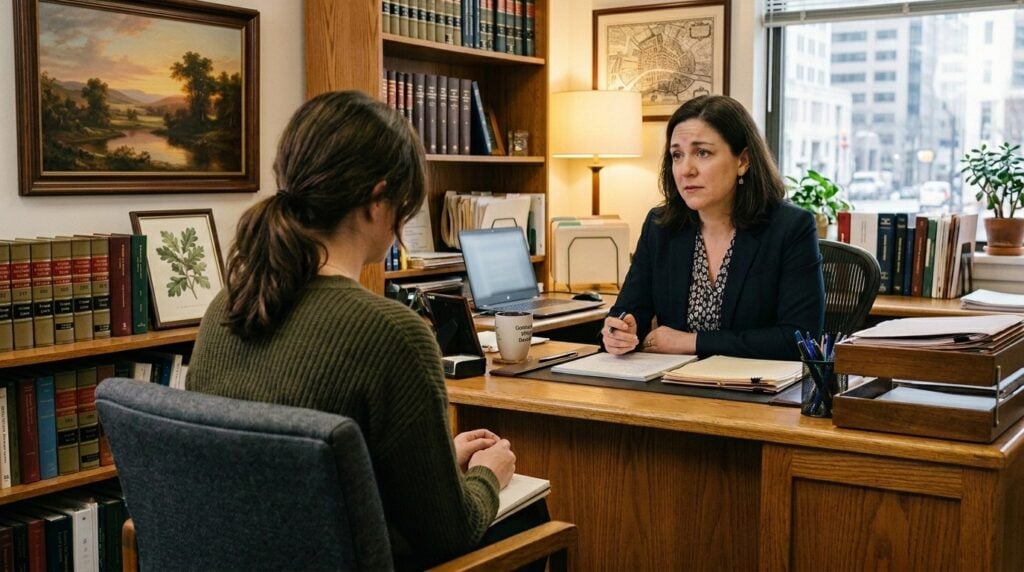
Key Takeaways
- A first consultation is confidential, free, and carries no obligation
- You do not need to have all the details ready before reaching out
- The lawyer’s role is to listen, not to judge
- You are in control of how much you share and when
- Legal options may still exist even if the abuse happened years ago
- Anonymous filing may be available to protect your privacy
What Is a Confidential Consultation?
A confidential consultation is a private meeting — by phone, video, or in person — between you and a lawyer who handles abuse cases.
Everything you share during this conversation is protected.
This means:
- The lawyer cannot share your information without your permission
- Nothing you say can be used against you
- You are not making any legal commitments by having this conversation
- You can stop the conversation at any time
The purpose of the consultation is simple: to help you understand whether you may have a legal claim and what your options might look like going forward.
Who Should Consider a Consultation?
You may benefit from speaking with an abuse lawyer if:
- You experienced physical, sexual, or emotional abuse in an institution
- You were harmed in a school, church, youth facility, or detention center
- You are a parent who suspects your child was abused
- The abuse happened years ago and you are unsure if it is too late
- You reported abuse and it was ignored or covered up
- You are simply not sure whether what happened qualifies
You do not need to have a clear-cut case to reach out. That is what the consultation is for.
Before the Consultation: What to Do
You do not need to prepare extensively. But a few simple steps can help you feel more comfortable and make the most of your time.
Steps to take before your consultation:
- Write down what you remember — approximate dates, locations, names of individuals involved, and what happened. It does not need to be complete or perfectly organized.
- Note any institutions involved — the name of the school, facility, church, or organization
- List any evidence you may have — records, emails, medical documents, or witness names
- Write down your questions — anything you want to ask the lawyer
- Decide how you want to connect — phone, video, or in person
Remember: you are not expected to have everything figured out. The lawyer is there to help fill in the gaps.
What Happens During the Consultation?
Here is a general overview of how a first consultation typically unfolds.
Step 1: Introduction and Confidentiality
The lawyer or intake team will begin by introducing themselves and confirming that everything discussed is completely confidential. This is your opportunity to ask any questions about privacy before sharing anything personal.
Step 2: You Share Your Story
You will be invited to share what happened — in as much or as little detail as you are comfortable with. A good lawyer will not push you to share more than you are ready to.
You might cover:
- What happened and where
- Who was involved
- When the abuse occurred
- Whether you reported it at the time and what response you received
Step 3: The Lawyer Asks Clarifying Questions
The lawyer may ask follow-up questions to better understand your situation. These questions are not meant to challenge you or cast doubt. They are meant to help the lawyer assess the legal aspects of your case.
Step 4: Legal Assessment
Based on what you share, the lawyer will give you an honest overview of:
- Whether a legal claim may be possible
- What laws may apply to your situation
- Whether time limits are a factor
- What the general process might look like
Step 5: Your Questions
This is your time to ask anything you want to know. No question is too small or too basic.
Step 6: Next Steps
If a claim may be possible, the lawyer will explain what the next steps could look like — without pressuring you to decide anything on the spot.
Table 1: What to Expect at Each Stage of the Consultation
| Stage | What Happens | What You Can Expect |
| Introduction | Lawyer introduces themselves | Confidentiality confirmed |
| Your story | You share what happened | Listened to without judgment |
| Clarifying questions | Lawyer asks follow-up questions | Questions are supportive, not challenging |
| Legal assessment | Lawyer evaluates your situation | Honest overview of options |
| Your questions | You ask what you need to know | Clear, plain-language answers |
| Next steps | Options are explained | No pressure to decide immediately |
What Questions Will the Lawyer Ask?
Many survivors worry about being asked difficult or intrusive questions. While every case is different, here are the types of questions a lawyer may ask during a first consultation:
- Where and when did the abuse occur?
- What type of institution was involved?
- Who was responsible — an individual, staff member, or the institution itself?
- Did you report the abuse at the time? If so, what happened?
- Are there any records, documents, or witnesses you are aware of?
- How has the abuse affected your life?
These questions help the lawyer understand the legal landscape of your situation. You can answer as broadly or specifically as you feel comfortable.
What Questions Should You Ask the Lawyer?
A consultation works both ways. Here are questions worth asking:
- Do I have a potential legal claim based on what I have shared?
- What laws apply to my situation?
- Is there a time limit for filing a claim?
- Can I file anonymously?
- What evidence would be helpful to gather?
- How long does the legal process typically take?
- What does contingency-based representation mean for me?
- What happens if we do not win the case?
- How will you communicate with me throughout the process?
Writing these down beforehand can help you feel more prepared and ensure you leave the consultation with the information you need.
What You Do NOT Need to Have Ready
Many survivors delay reaching out because they feel they are not prepared enough. Here is what you do not need before your first consultation:
- A complete or perfectly organized account of events
- Physical evidence or documentation
- A police report or prior formal complaint
- Certainty about whether what happened “counts”
- A decision about whether you want to move forward
The consultation exists precisely to help you figure these things out. You only need to show up.
How Long Does a Consultation Take?
Most first consultations last between 30 and 60 minutes, depending on the complexity of your situation and how many questions you have.
You will not be rushed. And if you need to stop or take a break, that is completely okay.
Some survivors find that one conversation is enough to feel clear about their next steps. Others prefer to take time to think before deciding anything. Both approaches are valid.
What Happens After the Consultation?
After your consultation, you have several options:
- Decide to move forward — the legal team begins a formal case evaluation
- Take time to think — there is no deadline to decide after a consultation
- Gather more information — the lawyer may suggest records or documents to collect
- Speak with family or a therapist — before making any decisions
- Choose not to proceed — with no obligation or consequence
The decision is entirely yours. A good legal team will respect whatever you choose.
Table 2: Common Concerns Before a Consultation — and the Reality
| Common Concern | The Reality |
| “I have to relive everything in detail” | You share only what you are comfortable with |
| “They will not believe me” | A lawyer’s role is to listen and assess, not judge |
| “It costs money just to talk” | Most consultations are free with no obligation |
| “I do not have enough evidence” | Evidence can be gathered later — testimony matters |
| “It is too late to file” | Many states have extended deadlines for abuse cases |
| “I will have to go public” | Many cases settle privately or allow anonymous filing |
| “I have to decide right away” | There is no pressure to commit during the consultation |
The Importance of Trauma-Informed Legal Support
Not all lawyers approach abuse cases the same way.
A trauma-informed legal team understands that:
- Survivors may have fragmented or non-linear memories
- Emotional responses during the consultation are normal and expected
- Pacing and comfort matter as much as legal strategy
- Survivors are the experts on their own experience
When seeking legal help for abuse survivors, look for a team that prioritizes your well-being alongside your legal rights — not just the outcome of the case.
Your Next Step Starts Here
Your first confidential consultation with an abuse lawyer does not have to be frightening.
It is a conversation — one where you are heard, respected, and given honest information about your options. Nothing more, nothing less.
Whether you experienced abuse in a school, church, juvenile facility, or any other institution, you deserve to know what legal options may be available to you. And the only way to find out is to take that first step.
You do not have to have everything figured out. You do not have to be ready to commit to anything. You just have to be willing to have a conversation.
That conversation could change everything.
👉 Speak confidentially with a lawyer today
✅ 100% confidential
✅ No obligation consultation
✅ No upfront cost — contingency-based representation
Frequently Asked Questions
Q: What is a confidential consultation with an abuse lawyer?
A: A confidential consultation is a private, protected conversation between you and a lawyer who handles abuse cases. Everything you share is legally protected and cannot be disclosed without your permission. It is free, carries no obligation, and is designed to help you understand whether you may have a legal claim and what your options might look like. You are not committing to anything by having this conversation.
Q: Do I need evidence before my first consultation?
A: No. You do not need physical evidence, a police report, or any formal documentation before your first abuse lawyer consultation. Personal testimony is a valid and important form of evidence in abuse cases. The consultation is the right time to discuss what you do and do not have — and a legal team can help identify what may be gathered later.
Q: Will I have to share every detail of what happened?
A: No. You share only what you are comfortable sharing. A trauma-informed legal team will never pressure you to go into more detail than you are ready for. The goal of the consultation is to understand the general nature of your situation — not to extract a complete account on the first call.
Q: Is the consultation really free?
A: Yes. Most abuse attorneys offer free, confidential consultations with no obligation. There is no cost to speak with a lawyer about your situation. If you decide to move forward, representation is typically provided on a contingency basis — meaning legal fees are only collected if there is a financial recovery in your case.
Q: What if I am not sure whether what happened qualifies as abuse?
A: That uncertainty is exactly why a consultation exists. Many survivors are unsure whether their experience “counts” legally. A lawyer experienced in institutional abuse legal options can listen to your situation and help you understand whether it may qualify as a claim. You do not need to have that answer before reaching out.
Q: Can I remain anonymous during the legal process?
A: In many cases, yes. Survivors may have the option to file as John or Jane Doe, which protects their identity throughout the legal process. This is especially important for survivors who are concerned about privacy or public exposure. Ask about this option during your consultation.
Q: What if the abuse happened a long time ago?
A: It may still be possible to file a claim. Many states have extended or changed their statutes of limitations for abuse cases, particularly those involving minors or institutional concealment. Lookback window laws in some states allow survivors to file even after the standard deadline has passed. A lawyer can help you understand whether your situation still qualifies.
Q: How long does the first consultation take?
A: Most first consultations last between 30 and 60 minutes. You will not be rushed, and you can take breaks if needed. The length depends on the complexity of your situation and how many questions you have. Some survivors find one conversation is enough to feel clear on next steps — others prefer to take more time before deciding anything.
Q: What happens after the consultation if I decide not to move forward?
A: Nothing. There is absolutely no obligation to proceed after a no obligation abuse consultation. You can take time to think, speak with family or a therapist, or simply decide the timing is not right. A good legal team will respect your decision without pressure or follow-up you did not ask for.
Q: How do I find a trauma-informed abuse lawyer?
A: Look for a legal team that specializes in institutional abuse cases — including school abuse, church abuse, and juvenile detention abuse claims. Ask whether they offer free consultations, contingency-based representation, and experience with trauma-sensitive cases. The right legal team will prioritize your comfort and well-being alongside your legal rights.
DISCLAIMER: This content is for informational purposes only and does not constitute legal advice. No attorney-client relationship is formed by reading this blog. Past results do not guarantee future outcomes.